

In Daughters of Chaos, author Jen Fawkes expertly weaves history and mythology to create an entirely unique take on story-telling. This book takes the structures of the patriarchy and flips them into chaos, honoring the innately divine feminine ways that have so long been repressed. Reading this book was like discovering a long lost hope inside of my chest, and even after I finished the last page, the flames grew higher. I was thrilled to be able to ask Jen a few questions about Daughters of Chaos! — Rachel Randolph, Parnassus bookseller
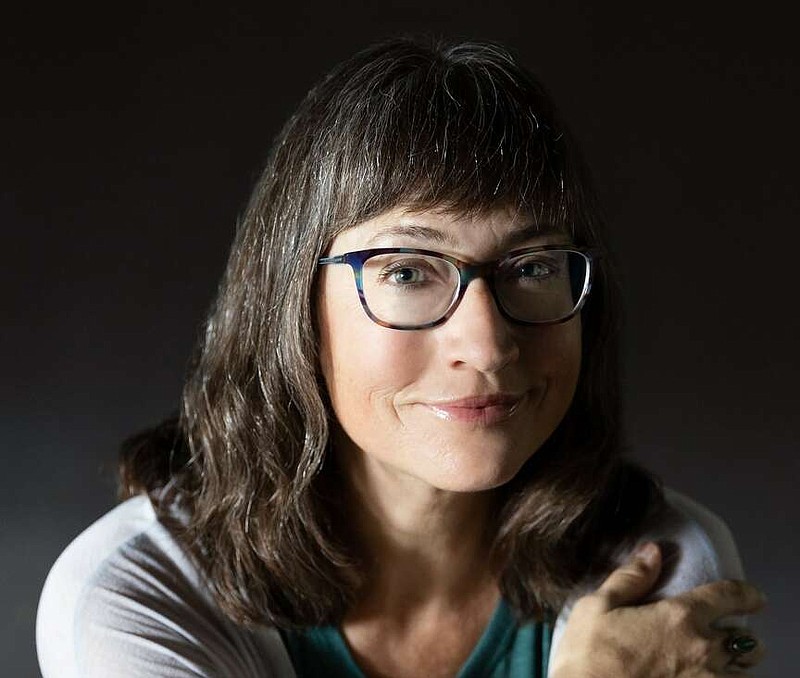
Rachel Randolph: Daughters of Chaos is a masterful blend of historical inspirations, from Greek myth to Civil War-era Nashville. Can you talk about your research process? What was it like to stitch together pieces of story and history?
Jen Fawkes: Before writing Daughters of Chaos, what I knew of the Civil War came from novels like The Red Badge of Courage, documentaries like Ken Burns’ The Civil War, films like Gone with the Wind and Glory, television shows like North and South, and American history courses, so in order to breathe life into Daughters of Chaos, I had to do a lot of research.
In the beginning, I focused on Civil War history, and the histories of Tennessee and Nashville. I sourced scholarly articles as well as maps and photographs of Civil War-era Tennessee from JSTOR and EBSCO. To get a feel for the lingo and attitudes of the 1860s, I used Chronicling America, a Library of Congress website that holds digitized images of historic newspapers from every US state (1756-1963). In addition, I visited Nashville, exploring the riverfront area where the red-light district (Smokey Row) was once located, the Tennessee State Capitol, and Fort Negley, where a pivotal scene in the novel takes place.
Later, when I decided to draw a parallel between the American Civil War and the Peloponnesian Wars, I pulled out my undergrad copy of Thucydides, reread plays by Aristophanes, and consulted analyses of Old Comedy. I studied maps of ancient Greece and 16th century Venice, Venetian history in toto, and the roles of courtesans and literary salons, specifically. I researched the city of Ephesus—home to the Temple of Artemis, one of the seven wonders of the ancient world—where I decided to set the Apocrypha, and the evolution of mother goddess cults throughout history. In addition to scholarly articles and nonfiction books like Margaret Rosenthal’s The Honest Courtesan and Stephanie McCurry’s Women’s War: Fighting and Surviving the American Civil War, I consulted websites like National Geographic, PBS, and Britannica.
My first favorite subjects were literature and history, so I suppose it was inevitable that I would write a full-length work of “historical fiction,” and equally inevitable that my take on history would be unlike anyone else’s. For me, human history IS a story—a possible interpretation of events, told from one viewpoint—so the most challenging part of stitching the two together was making sure my reader had the information they needed to follow Sylvie’s narrative as it shifts from text to text, and era to era.
RR: What drew you to Nashville history initially? Were there any interesting facts you learned that did not find a home in the final novel?
JF: Nashville’s attempted exile of its prostitutes, in the summer of 1863, inspired Daughters of Chaos, but what convinced me to pursue the narrative was learning that Nashville was an occupied city for most of the Civil War (February 1862 – April 1865). When we consider civil wars, we tend to think of polarity—north and south—rather than of borderlands—the contested territories where warring groups often end up colliding most fiercely.
Before writing Daughters of Chaos, I’d never considered that the most hotly contested states in the Civil War—as well as those that hosted the greatest number of battles—were border states (Virginia, Tennessee, Missouri, Kentucky). It was in these areas that brother literally fought brother, that people who’d lived harmoniously together—families, friends, neighbors—were torn asunder by ideology. The more I learned about Nashville—a critical transportation and communications hub—the more convinced I became that the city could prove an ideal microcosm to stand in for the larger American conflict.
I used the story of Pauline Cushman, actress and Union spy, to help me construct Sylvie’s narrative, and in an earlier version of the novel, Cushman appeared as a character. Pauline Cushman was in Nashville during the summer of 1863, and Colonel William Truesdail (also a real person) sent her to gather intelligence from Confederate camps. Cushman was captured and nearly executed, but she was ultimately rescued by the Union army. During a major revision of Daughters of Chaos, I had to jettison Pauline Cushman, but aspects of her story helped me shape the final novel.
RR: Can you talk about the importance of queer histories? What responsibility do you think the present holds when looking back and playing with history?
JF: For me, queerness is not only about sexuality but also about a mindset—one of intense curiosity, fierce skepticism, and radical acceptance. Queer people have existed as long as human society has, but their stories haven’t often been centered, or even told. As an avid believer in the power of narratives, and a dedicated fictioneer, I see it as my job (not to mention my honor) to dream such figures into existence.
In terms of a responsibility to the past, I tend to see the “history” I’ve been taught as only one possible version of events, so I don’t believe that manipulating the past diminishes, disparages, or denigrates it. I believe, in fact, that playing with history as I do in Daughters of Chaos actually opens, refines, and enriches our larger understanding of our past, both individually and collectively.
RR: You blend historical inspiration with fantastic elements in this novel. Can you talk about the power of speculative storytelling? How does fabulism help us understand history in a different context?
JF: Fiction that injects the uncanny into the everyday—fabulism—is my innate mode of storytelling. Replacing an aspect of the workaday world with its opposite, or something else entirely—the planet is 99% water and 1% land, for instance, so people live on ships—enables us to see human beings, our society, our behaviors, in a brand-new context, and with fresh eyes. This phenomenon is basically one of defamiliarization, theorized by the Russian Formalist critic Viktor Shklovsky.
Shklovsky suggested that the purpose of all art is to “make a stone stony,” to force its audience to see—truly see—objects and figures to which, through the familiarity of daily contact, we have all become “blind.” Humankind seems to be losing interest in its own history; the past, after all, can feel pretty flat as presented to students, in textbooks. There’s little roundness to it, little animation. But when we defamiliarize a commonplace aspect of the past—have a lion narrate a story set in the Roman Colosseum, for instance—we’re forced to see the Romans, their entertainments, the level of their barbarity, in a new context. Such moves can reanimate history, breathing life back into the flattened record of our own past.
RR: Monstrous women are having a bit of a moment in fiction recently. What do you think draws us to stories of feminine chaos?
JF: Society has cast women in the role of the “weaker sex,” but that notion was always already false. We’re told that women are diminutive, quiet, and meek; we’re told that monsters are enormous, loud, and dangerous, and I think many of us receive an automatic thrill when those notions are inverted. Women can absolutely take up space; women can absolutely shake the heavens with a roar; women can absolutely tear men limb from limb.
I hope that by now, most of us understand that we (people) are our own monsters, but when it comes to locating the kind of raw, metaphysical, grisly, inexplicable abilities we’ve long attributed to monsters, there’s only one place to look—inside the womb, whence life (the only supernatural force I’ve encountered) emerges. Women are physically tougher than men, yes, but I also believe that feminine thought patterns—less linear, more associative, more abstract—enable us to change, to pivot, to metamorphose, which, let’s face it, makes us more effective monsters.
My favorite thing about writing Daughters of Chaos was learning that feminine chaos is, in fact, the source of absolutely everything.
RR: Congratulations on a fantastic debut novel! Can you tell us anything about your next project? Do you think you will always be drawn towards historical fiction?
JF: I’m currently working on a novel with a historical component, but I’m also working on a future-set novel in which women start reproducing via fragmentation rather than live birth. My interests are so varied that it’s hard to imagine I’ll ever stick to one genre.
The partly historical book is a speculative mystery set in a California Kirkbride insane asylum that’s been converted into condominiums. The (present-set) external story is that of a film professor who sublets a unit in the building as she works on a book about the disappearance of a 1940s film star once committed to the asylum. The (past-set) interior story, told through the diaries of the hospital’s head nurse, recounts the events that preceded the movie star’s disappearance.
The novel deals with the historical treatment of women’s mental health, big cats, Hollywood’s golden age, and feral children. The working title is Lady Maneater.
RR: And finally, we always end with this question: what is your favorite thing about indie bookstores?
JF: My mom’s favorite place on earth was Publishers Bookstore, an independent Little Rock, Arkansas, bookshop that shut down in the 1990s. I practically grew up at Publishers, and at the downtown public library, as my mom was a hardcore bibliophile. It saddens me that as a species, we’re losing sight of the critical importance of stories, and I’m so thankful that indie bookstores are here—and seemingly thriving—to remind us.
Daughters of Chaos is on our shelves now! Grab your copy here.

 Musing